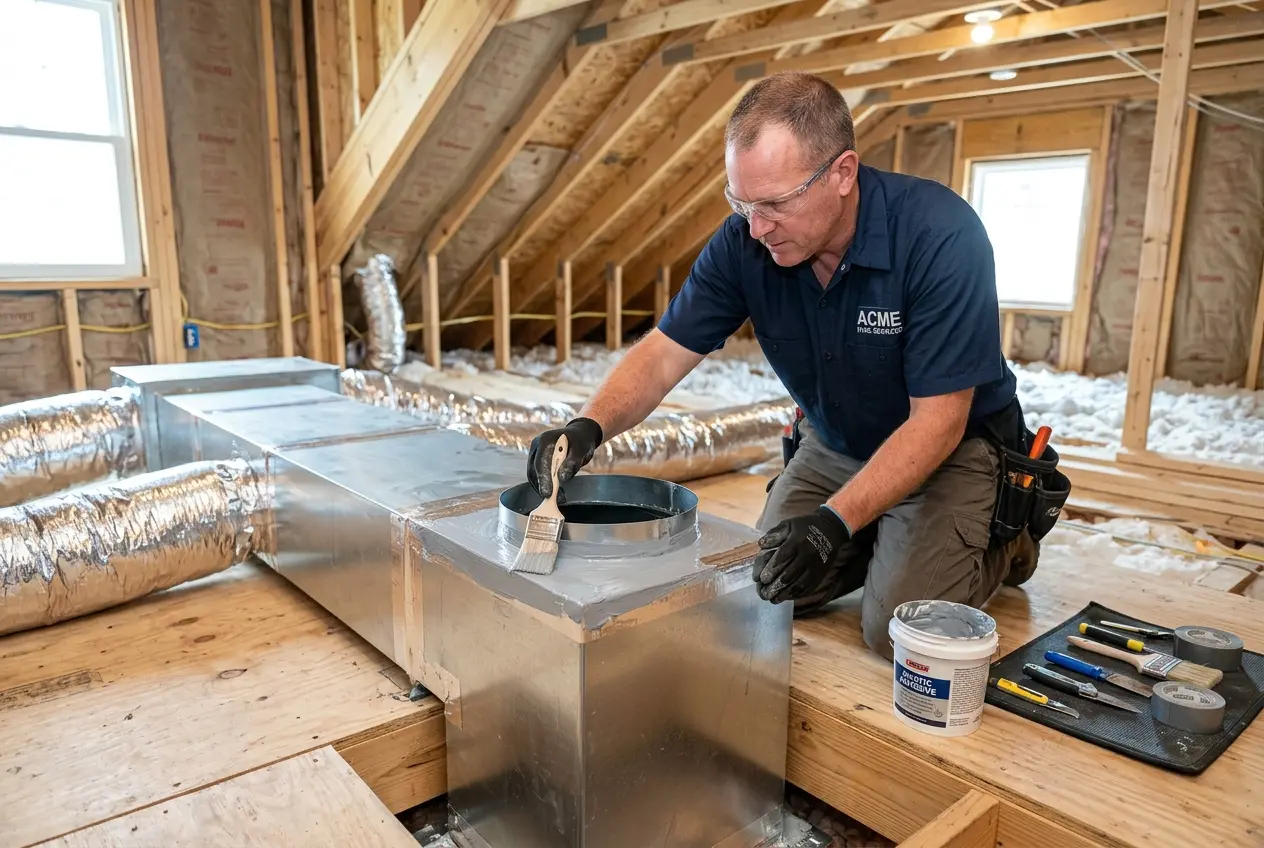
Phoenix homes lose an average of 30% cooled air through faulty ductwork - essentially air conditioning the desert beneath your house. Our aeroseal process targets leaks in hard-to-reach spaces common in Arizona construction: attic runs above insulation, slab foundations, and stucco wall chases.
We begin with smoke testing to identify major leaks, then use specialized sealants that withstand 150°F attic temperatures. The process preserves original ductwork while eliminating energy waste - crucial for older Mesa homes where replacement would require tearing into stucco walls.
Post-service thermal imaging verifies improvements, with typical customers seeing 20-40% reductions in cooling costs across our service area from Tempe to Gilbert.
We begin with smoke testing to identify major leaks, then use specialized sealants that withstand 150°F attic temperatures. The process preserves original ductwork while eliminating energy waste - crucial for older Mesa homes where replacement would require tearing into stucco walls.
Post-service thermal imaging verifies improvements, with typical customers seeing 20-40% reductions in cooling costs across our service area from Tempe to Gilbert.
Our Process
- 01 Step 1: Pressure testing to quantify air loss
- 02 Step 2: Smoke tracing to locate major leaks
- 03 Step 3: Precision application of high-temp sealant
- 04 Step 4: Post-sealing verification
Benefits
- Non-invasive process preserves stucco walls
- Reduces dust infiltration during haboobs
- Improves airflow to distant rooms
- Qualifies for APS/SRP rebates
Frequently Asked Questions
Will this help my second floor stay cool?
Yes, balancing airflow is particularly effective in Arizona's common two-story designs.
How long does sealant last?
Our aerospace-grade polymers remain flexible through 20+ years of thermal expansion cycles.
Do you seal flex duct?
We repair or replace compromised flex duct runs common in 1990s Chandler homes.